PACKINT - Chocolate Machines

How to Choose Cocoa Processing Equipment for Your Business?

Choosing Cocoa Processing Equipment is not a simple matter of comparing prices. It is a production decision that affects flavor, hygiene, energy use, labor, and future capacity. A small chocolate workshop may need a compact roaster, reliable grinder, and easy-to-clean tempering unit. A large factory may require continuous roasting, automated refining, conching, and integrated cooling systems.

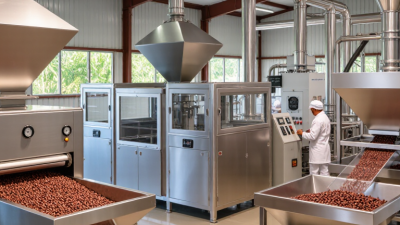
Harold Schmitz, former Chief Science Officer at Mars, has described chocolate as “a very complex food.” That observation matters when selecting machinery. Cocoa beans vary in size, moisture, origin, and fermentation quality. Equipment must respond to those differences without damaging delicate aromas. A roaster with precise temperature control can protect flavor. A well-designed winnower can reduce shell loss and improve nib purity. Stainless-steel contact surfaces also support safer, more consistent production.

Look beyond the brochure. Ask suppliers for test-run data, cleaning procedures, spare-parts availability, and operator training. Check whether the machine can handle your expected batch size, power supply, ventilation system, and local safety requirements. Energy consumption deserves attention. Small savings per batch can become significant across a full year.

The cheapest option may become expensive later. Downtime hurts.

I have seen equipment choices fail when businesses focus only on output speed. Maintenance access, noise, heat, and operator comfort are easy to overlook. They still shape daily performance. A careful decision should balance product quality, measurable efficiency, technical support, and realistic growth. Even experienced buyers should leave room for review, because the best equipment on paper may not suit every cocoa-processing environment.
How to Choose Cocoa Processing Equipment for Your Business?

Define Your Cocoa Processing Goals and Production Requirements

Choosing cocoa processing equipment starts with a clear production target. Define your product before comparing machines. Will you make cocoa liquor, butter, powder, or finished chocolate? Each product needs different grinding, pressing, heating, and refining capabilities. Record your expected daily output, batch size, operating hours, and seasonal demand. A small workshop may need flexible batch equipment, while a larger plant may require continuous processing. Do not estimate capacity from peak demand alone. I have seen oversized systems create unnecessary energy costs and difficult maintenance schedules. Your target should include acceptable particle size, moisture level, temperature range, and product consistency. These details turn a vague purchase into measurable requirements.

Review the raw beans and your process conditions carefully. Bean variety, shell content, roast profile, and moisture can change equipment performance. Ask suppliers for test data using comparable cocoa materials. Check whether the machine allows precise control of roasting temperature, grinding speed, pressure, and cooling time. Food-contact surfaces should support hygienic cleaning, with accessible inspection points. Also measure your floor space, electrical supply, ventilation, water access, and drainage. A machine can meet its output promise yet fail in your building. That mistake is expensive. Leave room for maintenance and future expansion. Your first estimate may be wrong.

Tips: Write a one-page process brief before requesting quotations. Include target output, product specifications, utility limits, cleaning frequency, and operator skills. Request trial results, warranty terms, spare-part availability, and training details. Keep one assumption open for review. Validate the final choice with a pilot run and documented quality checks.

Compare Equipment Types Across Each Cocoa Processing Stage

Choosing cocoa processing equipment starts with the product you plan to sell. Cocoa liquor, butter, and powder require different process lines. The International Cocoa Organization estimated global cocoa grindings at about 4.855 million tonnes in 2023/24. That scale shows why capacity planning matters, even for smaller factories.

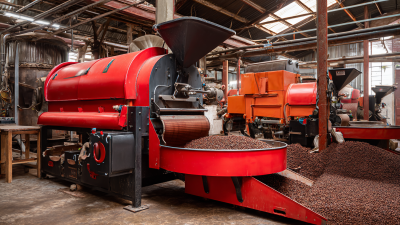
Cleaning equipment removes stones, metal, and dust before roasting. Magnetic separators and vibrating screens suit different contamination risks. Roasters may use batch drums for flexible production or continuous systems for steadier output. After roasting, winnowing machines separate shells from nibs. Shell removal efficiency deserves close attention. Small losses can become expensive across many tonnes.

Grinding equipment converts nibs into cocoa liquor. Stone mills can support small batches, while modern pin or disc mills offer higher throughput and tighter particle control. Presses then separate cocoa butter from cocoa cake. Hydraulic presses provide flexibility, but automatic systems can improve consistency. Powder mills finish the cake, and classifiers control particle size. The Codex Standard for Cocoa Powders and Dry Cocoa Mixtures, CXS 105-1981, highlights the importance of composition and quality control. Alkalizing equipment adds another decision: batch vessels are easier to adjust, while continuous units can reduce handling.

Do not select machinery from capacity figures alone. Ask for verified trials using your bean variety, moisture level, and target particle size. Energy use, cleaning time, spare parts, and operator training often change the real cost. My practical concern is simple: a faster line may create more waste if calibration is weak. A smaller machine may be wiser initially. Recheck the assumptions.

How to Choose Cocoa Processing Equipment for Your Business? - Compare Equipment Types Across Each Cocoa Processing Stage

Processing Stage Main Objective Equipment Types to Compare Key Differences Important Selection Factors Typical Output
1. Cleaning Remove stones, metal, dust, plant material and other foreign matter before processing. Vibrating cleaner Air aspirator Magnetic separator Destoner Basic screen cleaners remove particles by size; air aspiration separates light materials; destoners separate dense contaminants; magnets capture ferrous metal. Raw bean variation, cleaning efficiency, dust control, screen accessibility, food-safety design and required throughput. Clean cocoa beans with reduced foreign-material content and improved feed consistency.
2. Roasting Develop cocoa flavor, reduce moisture and loosen the shell from the nib. Batch drum roaster Continuous belt roaster Fluidized-bed roaster Batch units provide flexible recipe control; continuous systems support steady production; fluidized-bed designs offer rapid heat transfer and short residence times. Bean size, roast profile, residence time, temperature uniformity, energy recovery, exhaust treatment and batch or continuous operation. Roasted cocoa beans with a controlled flavor profile and lower moisture content.
3. Cracking and Winnowing Break roasted beans and separate cocoa nibs from the lighter shells. Cracker Winnower Multi-stage separator Crackers control particle size; winnowers use airflow and screening; multi-stage systems improve shell separation when bean sizes vary. Nib yield, shell content, breakage level, airflow control, dust collection and adjustment for different bean sizes. Cocoa nibs suitable for grinding, with shells collected as a separate by-product stream.
4. Nib Sterilization or Treatment Reduce microbial load while maintaining the desired flavor and moisture profile. Steam treatment system Thermal treatment unit Continuous hygienic conveyor Steam-based systems use moist heat; dry thermal systems rely mainly on hot air or controlled surface heating; the treatment method affects flavor and moisture. Validated time-temperature process, moisture control, hygienic zoning, condensation management and post-treatment contamination prevention. Treated cocoa nibs meeting the processor’s microbiological and quality requirements.
5. Grinding Convert cocoa nibs into cocoa liquor, also called cocoa mass, by releasing cocoa fat and reducing particle size. Stone or disc mill Pin mill Ball mill Colloid mill Mill designs differ in shear, impact, cooling requirements, residence time and final particle-size control. Some lines use pre-grinding followed by fine grinding. Target fineness, liquor temperature, fat content, cooling capacity, wear-resistant surfaces, cleaning method and production rate. Fluid cocoa liquor used directly in chocolate manufacture or separated into cocoa butter and cocoa cake.
6. Pressing Separate cocoa liquor into cocoa butter and cocoa press cake. Hydraulic cocoa press Automatic multi-pot press Butter filtration system Presses differ in the number of pots, automation level, pressure cycle and control of residual fat in the cake. Filtration improves butter clarity. Desired butter yield, residual fat target, liquor temperature, pressing-cycle time, cake thickness, filtration and cleaning requirements. Cocoa butter and cocoa press cake with a controlled residual fat level.
7. Cake Breaking and Pulverizing Reduce press cake into a uniform cocoa powder feedstock. Cake breaker Pin mill Hammer mill Classifier mill Cake breakers prepare large pieces; impact mills provide size reduction; classifier mills combine grinding with air classification for tighter particle-size control. Press-cake hardness, fat content, heat generation, powder fineness, mill wear, dust explosion protection and product temperature. Ground cocoa powder with a controlled particle-size distribution.
8. Sieving and Powder Classification Remove oversize particles and produce a consistent powder grade. Vibratory sifter Air classifier Centrifugal sifter Vibratory sifters separate by screen size; air classifiers use aerodynamic behavior; centrifugal sifters are compact and suitable for continuous powder handling. Target particle-size distribution, screen mesh, product temperature, sieve blinding, dust containment and ease of sanitation. Uniform natural or alkalized cocoa powder ready for blending, packing or further processing.
9. Alkalization Modify cocoa color, flavor, acidity and dispersibility by treating cocoa with an alkaline solution. Batch alkalizer Continuous alkalization system Drying and roasting unit Batch systems offer recipe flexibility; continuous systems improve consistency at higher production rates. The process may include liquid dosing, mixing, heating and drying. Alkali concentration, pH target, color development, moisture removal, residence time, wastewater handling and recipe repeatability. Natural or alkalized cocoa powder with a specified color, pH and flavor profile.
10. Chocolate Refining Reduce sugar and cocoa particles to create a smooth chocolate texture. Five-roll refiner Ball refiner Refining conche Roll refiners provide controlled particle reduction; ball refiners combine grinding and mixing; integrated systems can reduce transfers between stages. Target particle size, formula viscosity, fat distribution, cooling control, cleaning time and compatibility with the chocolate recipe. Refined chocolate mass with a smooth texture and controlled particle-size distribution.
11. Conching Develop flavor, reduce unwanted volatile acidity and improve texture through controlled mixing, aeration and heat. Batch conche Continuous conche Dry or liquid conche Batch conches support multiple recipes; continuous conches provide steady production; dry and liquid phases require different moisture and fat management. Conching time, temperature, shear, aeration, moisture removal, product viscosity, batch size and recipe changeover requirements. Homogeneous chocolate with improved flavor and flow properties.
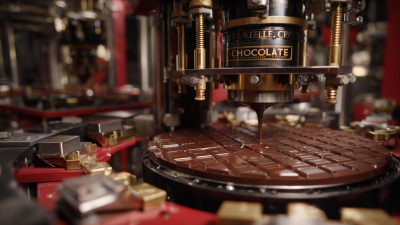
12. Tempering and Moulding Control cocoa butter crystallization and form chocolate into bars, blocks, chips or other products. Continuous tempering unit Batch temperer Depositor and moulding line Cooling tunnel Continuous tempering suits stable, higher-volume production; batch temperers offer flexibility; moulding and cooling systems determine product shape, gloss and release performance. Chocolate type, tempering curve, viscosity, deposit accuracy, mould format, cooling profile, line speed and changeover time. Glossy, well-formed chocolate products with suitable snap, contraction and shelf stability.
Selection note: Equipment capacity, temperature settings, residence time and particle-size targets should be confirmed through product trials because cocoa bean variety, moisture, fat content, recipe and desired product specification can significantly affect the final process design.

Match Machine Capacity, Quality Controls, and Automation Levels

Choosing cocoa processing equipment starts with realistic capacity, not the largest machine available. The ICCO Cocoa Market Report 2023/24 estimated global cocoa grindings at about 4.855 million tonnes. This scale shows strong demand, but it does not justify oversized equipment for every factory.

Calculate hourly output from annual production, operating days, shifts, and expected downtime. Add a practical reserve of 10–20 percent, rather than doubling capacity without evidence. For example, a plant producing 1,200 tonnes yearly may need only a 500–700 kilogram-per-hour line, depending on its schedule. Roasters, winnowers, mills, and presses must also remain balanced. One fast machine cannot repair a slow downstream process. It sounds obvious.

Quality controls should be specified beside capacity. Roasting equipment needs stable temperature recording and adjustable residence time. Grinding systems should monitor particle size, product temperature, and contamination risks. Moisture checks matter during bean receiving and storage. A 2024 FAO food safety publication continues to emphasize preventive controls, traceability, and hygienic process design. Aligning equipment with HACCP principles and ISO 22000-based procedures can make inspections more consistent.

Automation should match staff skills and product complexity. Basic automation may control temperature and motor speed, while advanced systems collect alarms, batch records, and production data. Remote monitoring is useful, but it cannot replace trained operators. A fully automated line may reduce labor, yet increase maintenance demands and training costs. Pilot trials often expose overlooked issues, including sticky cocoa liquor, unstable feeding, or difficult cleaning access. These details can change the best equipment choice.

Evaluate Energy Use, Maintenance Needs, Safety, and Food Compliance

How to Choose Cocoa Processing Equipment for Your Business?

Energy use should be measured per tonne of finished cocoa product, not by motor size alone. The IEA’s Energy Efficiency 2023 report says industry consumed about 37% of global final energy in 2022. That figure makes heat recovery, insulation, and variable-speed drives practical purchasing questions. Ask suppliers for tested kWh per tonne data under stated capacity. Then verify it during a pilot run.

Small leaks matter. Steam losses, idle heaters, and compressed-air leaks quietly inflate operating costs. A cheap machine can become an expensive habit.

Maintenance deserves equal scrutiny. Request access points, spare-part lead times, lubrication schedules, and cleaning downtime. Track mean time between failures, but question optimistic estimates. Real cocoa dust is fine, sticky, and persistent.

Operators need guarded moving parts, lockout procedures, emergency stops, and clear training. The ILO reported 2.93 million work-related deaths globally in 2019, showing why safety cannot be treated as paperwork. A safer layout may also reduce stoppages and rushed repairs.

Food compliance begins with hygienic design. Product-contact surfaces should resist corrosion, drain fully, and avoid hidden crevices. Codex Alimentarius General Principles of Food Hygiene, CXC 1-1969, places sanitation and HACCP-based controls at the center of food safety.

Confirm traceable materials, allergen-control procedures, validated cleaning, and calibration records. Ask for documentation, not promises.

One uncomfortable truth remains: the highest-rated option may not fit your maintenance team. Recheck utilities, washdown methods, worker skill, and local requirements before signing. Good decisions leave room for revision.

Build a Budget Based on Total Ownership Costs and Future Expansion

Choosing cocoa processing equipment should begin with total ownership cost, not the purchase price. A low quotation can hide installation work, operator training, spare parts, energy use, and cleaning time.

Calculate the expected cost per production hour over at least five years. Include electricity, water, labor, maintenance, and planned downtime.

Do not chase the lowest quote.

Ask suppliers for documented performance data, service intervals, and realistic capacity figures. Check whether the equipment handles your cocoa bean size, moisture range, and target output. A test run with representative beans can reveal heat loss, uneven grinding, or difficult cleaning areas. These details affect daily margins more than a polished specification sheet.

My early estimates were too optimistic. I underestimated ventilation upgrades and lost production during maintenance. That mistake changed how I build equipment budgets. I now keep a contingency reserve for site modifications and unexpected repairs. Plan for downtime.

Also, price future expansion before signing. Leave space for an additional roasting line, larger storage, or automated packing. Confirm that electrical capacity, floor loading, drainage, and control systems can support growth.

Modular equipment may cost more today but reduce replacement costs later.

However, expansion plans can also become expensive assumptions. Review them against signed orders, available staff, and cash flow.

A careful budget should show both the cost of buying capacity and the cost of waiting for it.